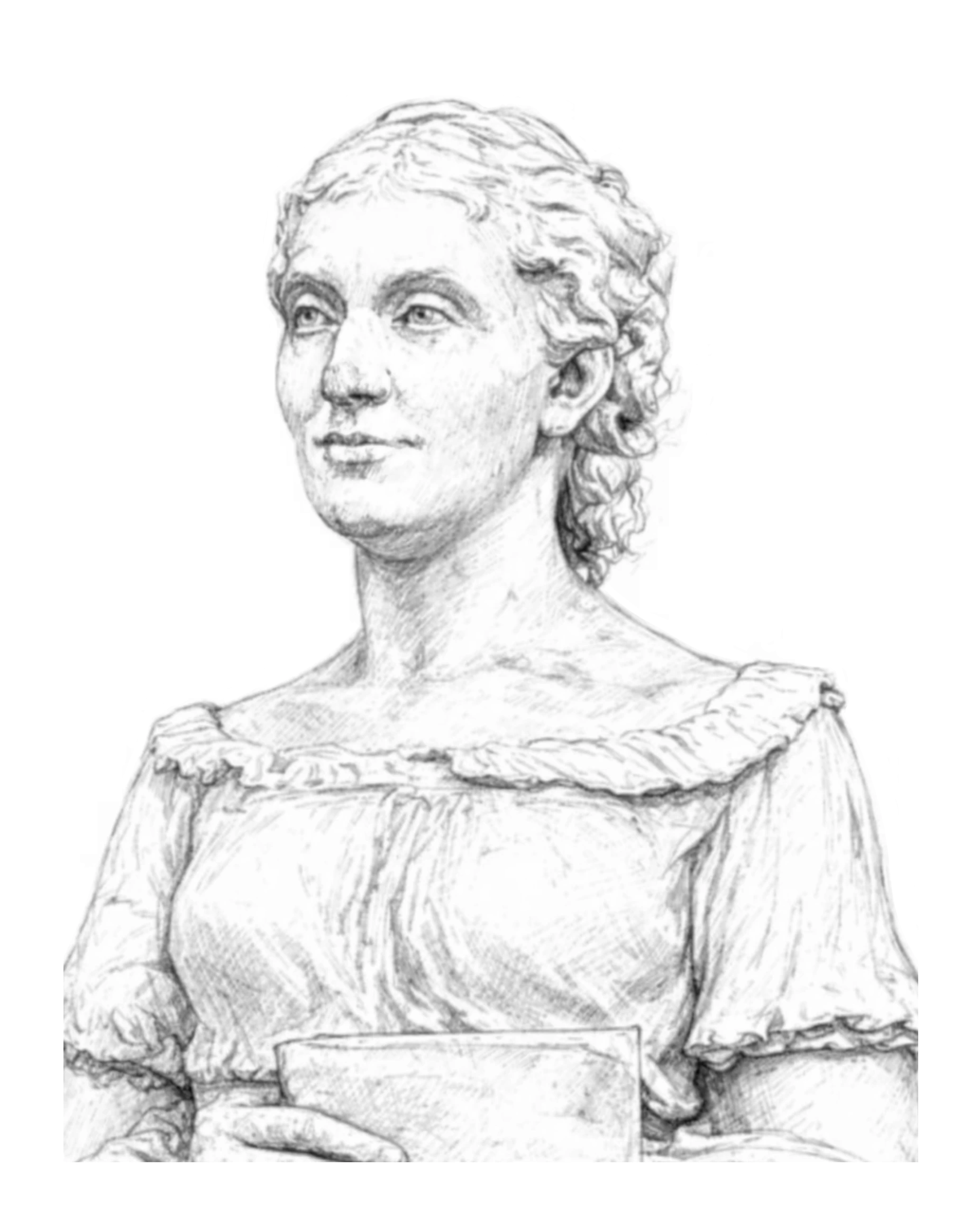
Portrait of Sophie Germain

Primes and ResonanceSophie Germain’s 250th Birthday

Faraday Theatre at the Royal Institution, London

Date 1 April 2026
Time 14:00–19:00

Lukas Brantner, Ana Caraiani, James Maynard FRS, Laura Monk


Sophie Germain is remembered for her major contributions to mathematics, ranging from advances in number theory (related to Fermat’s Last Theorem) to foundational results on vibrating plates. She was the first woman to win a major competitive research prize in mathematics.

We will celebrate her 250th birthday with four general-audience talks, a live demonstration, and a speaker panel bringing her life and work into focus.
No specialist background is assumed.

Expect history, Fermat’s Last Theorem, sand figures on vibrating plates, and open questions on primes, moving from deep theory to patterns you can see.


Schedule

An afternoon programme for a general audience.
Wednesday, 1 April 2026. Doors open at 13:45 and the first talk starts at 14:00 sharp.

13:45–14:00
Arrival
14:00–14:45
The life of Sophie Germain — Lukas Brantner
14:45–14:50
Short break
14:50–15:35
15:35–15:50
Break
15:50–16:10
Live Chladni figures demonstration
16:10–16:15
Short break
16:15–17:00
17:00–17:05
Short break
17:05–17:35
Speaker panel
17:35–18:00
Break
18:00–19:00
Sophie Germain and prime numbers — James Maynard FRSOxford Mathematics Public Lecture

Jump to the talk titles & abstracts below.

All lectures will also be made available on YouTube by Wednesday 29 April; links will be posted here.

Talk titles & abstracts

Abstracts for the four invited talks.

The life of Sophie Germain

Lukas Brantner

Sophie Germain’s story is one of exceptional talent and persistence. I will describe the main stages of her life: her childhood in revolutionary Paris, her use of the pseudonym “Monsieur Le Blanc” to enter the world of mathematics, the support she received from Lagrange and Legendre, her correspondence with Gauss, her rivalry with Poisson, and her eventual success in winning the Academy of Sciences’ Grand Prix for her work on vibrating plates.

Sophie Germain’s favourite problem

Ana Caraiani

Sophie Germain’s favourite unsolved problem, to which she devoted much of her research, is known as Fermat’s Last Theorem. This was a centuries-old mystery that catalysed the development of modern number theory, and that was finally resolved at the end of the 20th century in a stunning breakthrough by Sir Andrew Wiles. This talk will give a gentle introduction to the old and new mathematics surrounding Fermat’s Last Theorem.

Research on the theory of elastic surfaces

Laura Monk

Chladni presented his experiments to the Paris Academy of Sciences and Napoleon, showing intriguing figures that appear on a vibrating plate. Sophie Germain’s interest was sparked when the Academy set a prize to find a mathematical explanation for this phenomenon, and she began working on the problem, which was believed to be outside the current reach of mathematics. I will present the ingenious ideas she developed upon studying this question, ultimately leading to the invention of the mean curvature, the finding of the correct equation with Lagrange’s input, and the prix extraordinaire of the Academy.

Sophie Germain and prime numbers

James Maynard FRSOxford Mathematics Public Lecture

One of Sophie Germain’s fundamental contributions was to connect Fermat’s Last Theorem with questions on the distribution of prime numbers. Even though Fermat’s Last Theorem is now solved, questions raised by Sophie Germain’s work remain unsolved and relevant now over 200 years later, with important links to internet cryptography as well as pure mathematics. I’ll describe Sophie Germain’s work, its relevance to the modern day, and progress towards resolving the questions she asked.

The Oxford Mathematics Public Lectures are generously supported by XTX Markets.


Speakers

Lukas Brantner

Lukas Brantner is a Royal Society University Research Fellow at the University of Oxford, specialising in topology, the study of shape, and its interactions with arithmetic geometry. He completed his undergraduate studies at St John’s College, Cambridge, and his PhD in mathematics with Jacob Lurie at Harvard. He has held positions at the Max Planck Institute in Bonn, MSRI in Berkeley, Merton College, Oxford, and CNRS in Paris, where he retains an affiliation as chargé de recherche en détachement. Lukas’ research extends classical Lie theory and Koszul duality beyond characteristic zero, with applications across algebra, geometry, and topology. He has given invited seminar and conference talks at venues around the world. Alongside his research, Lukas has also developed an interest in the life and work of Sophie Germain.

Lukas Brantner

Ana Caraiani

Ana Caraiani is a Royal Society University Research Fellow (Professor) at Imperial College London. Her area of research is algebraic number theory, particularly the Langlands program and arithmetic geometry. Ana obtained her PhD in mathematics from Harvard in 2012. Prior to coming to Imperial in 2017, she held temporary positions at the University of Chicago, at Princeton and the Institute for Advanced Study, and at the University of Bonn. She has won numerous prizes, including a Whitehead Prize in 2018, a Prize of the European Mathematical Society and a Leverhulme Prize in 2020, a New Horizons Prize in Mathematics in 2023, and the Ruth Lyttle Satter Prize in 2025. She has given more than 200 talks for a variety of mathematical audiences, including an invited address at the 2022 International Congress of Mathematicians in the number theory and algebraic geometry sections.

Ana Caraiani

Photo credit: Louise Rose Photography

James Maynard FRS

James Maynard is a Professor at the University of Oxford specialising in analytic number theory. After studying mathematics at Queens’ College, Cambridge, he completed his DPhil at Oxford under the supervision of Roger Heath-Brown, and previously held positions in Montreal, Berkeley, Princeton, and Magdalen College, Oxford. James’ work on number theory, particularly the distribution of primes, has been recognised with numerous prizes, including the Whitehead Prize, a Prize of the European Mathematical Society, the Cole Prize in Number Theory, the New Horizons in Mathematics Prize, and the Fields Medal, which is the highest honour in mathematics.

James Maynard

Laura Monk

Laura Monk is a Royal Society Dorothy Hodgkin Fellow and Lecturer in the School of Mathematics of the University of Bristol. Her research focuses on the spectrum of the Laplacian on random hyperbolic surfaces, building on modern probabilistic ideas and tools to gain new insight on old questions at the interface of geometry, analysis and dynamics. Laura Monk completed her PhD in 2021 at the University of Strasbourg (France) under the supervision of Nalini Anantharaman. She was awarded the Prize L’Oréal-UNESCO Young Talents France for Women in Science in 2021 and the Maryam Mirzakhani New Frontiers Prize in 2024, for her contributions to understanding random hyperbolic surfaces of large genus.

Laura Monk

Registration

Reserve a seat for the full event, or choose only the sessions you would like to attend.

Free, but registration is required.

What would you like to attend?

Choose the whole afternoon or just the parts of the programme you would like to attend. Capacity is tracked item by item: a full-event booking counts once towards each talk, the demonstration, and the speaker panel, and a partial booking counts only towards the programme items selected.


Venue

Royal Institution, 21 Albemarle Street, London W1S 4BS.

Royal Institution
21 Albemarle Street
London W1S 4BS
United Kingdom

Nearest Tube: Green Park (Jubilee, Victoria, and Piccadilly lines) — about a 5-minute walk.

Walk along Piccadilly and turn into Albemarle Street. The Royal Institution is at number 21.

Walking map from Green Park stationAbout five minutes on foot.

Schematic walking map to the Royal Institution A simple route from Green Park station along Piccadilly and up Albemarle Street to the Royal Institution. PICCADILLY Green Park Royal Institution Faraday Theatre 21 Albemarle Street Approx. 5 min walk Open directions in Google Maps